Abstract
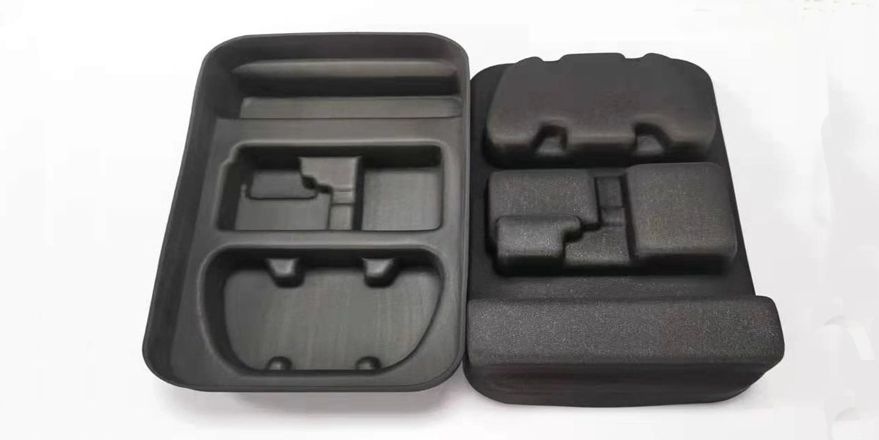
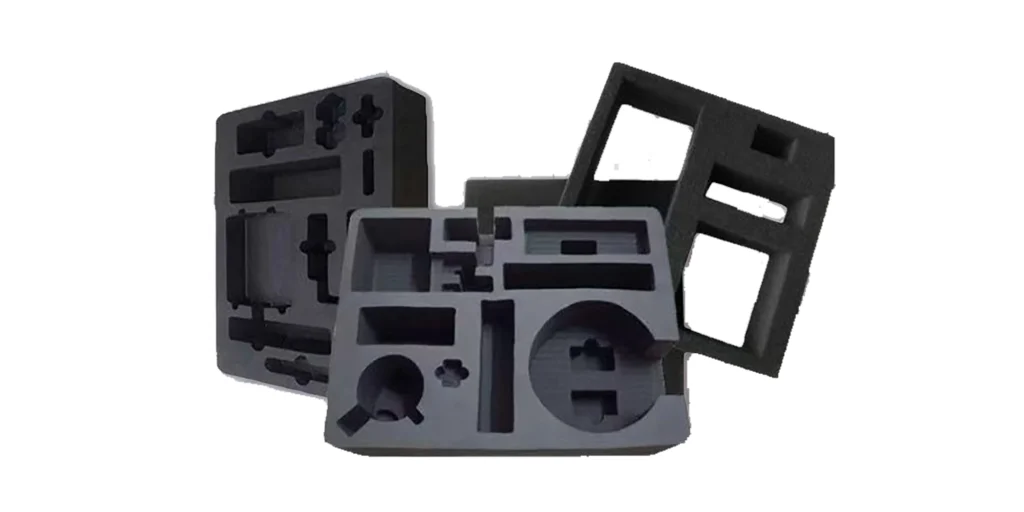
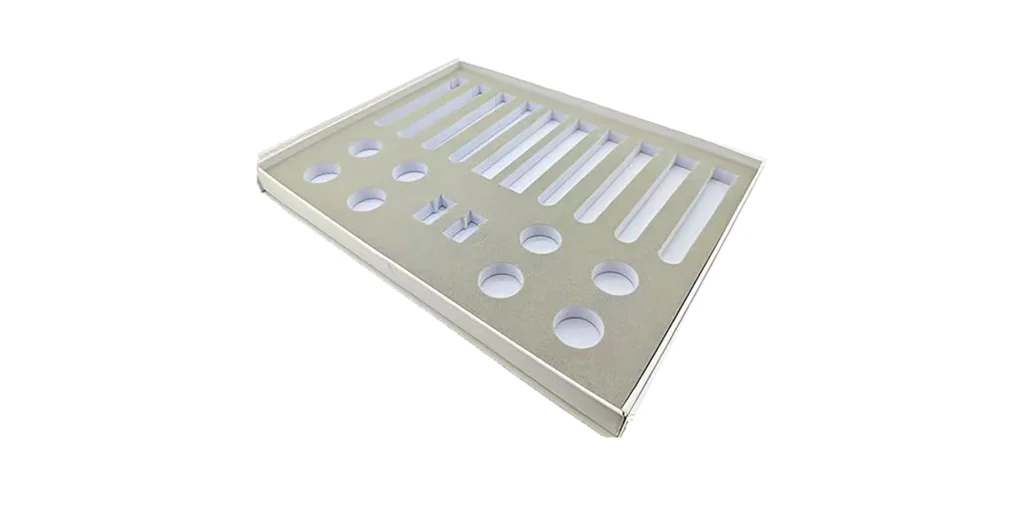
This technical analysis reveals how EVA Injection Foam is revolutionizing battery pack sealing systems in the explosive 2024 NEV market. Through five critical performance dimensions—flame resistance, lightweighting, thermal management, vibration damping, and environmental compliance—we demonstrate with OEM case studies (CATL, BYD) and test data how this material enables simultaneous achievement of IP67 protection, UN38.3 certification, along with weight and cost reductions.
Main Content
I. Five Battery Sealing Breakthroughs
| Challenge | Conventional Limitations | EVA Advantages | Validation Data |
|---|---|---|---|
| Thermal Runaway | Silicone (OI≤22) | OI≥28 | UL94 V-0, 800°C/120s delay |
| Weight Reduction | +15kg metal frames | 0.08g/cm³ density | 40% weight savings (3.8kg avg) |
| Thermal Cycling | Rubber leakage | <-40°C~125°C ΔV<2% | 50 cycles @ IP67 maintained |
| Vibration Damping | PU foam inadequate | 35% energy absorption | 20G shock resistance |
| Electrolyte Resist | NBR swelling | 72h immersion ΔV≤1.5% | SEM shows zero degradation |
II. OEM Implementation Cases
1. CATL Qilin Battery Upgrade
Issue: Silicone seal failure during fast-charging heat
Solution: 1.5mm EVA foam (18% VA)
Results:
✓ Passed 120°C/1000hr aging (2x beyond GB)
✓ 200kN cell crush resistance (vs 100kN required)
✓ 2.3kg weight reduction → +12km range
2. BYD Blade Battery Edge Protection
Pain Point: Metal frame stress concentration
Innovation: EVA co-injected edges (Shore C60)
Outcomes:
✓ 1800N puncture resistance (vs 800N standard)
✓ 45% faster cycle time (90s molding)
✓ ¥85/pack cost saving (>¥200M annual)
III. Precision Engineering Parameters
1. Battery-Optimized Formulation
| Component | Function | Content |
|---|---|---|
| EVA (18%VA) | Matrix | 68% |
| Expanded Graphite | Flame retardant | 12% |
| Boron Nitride | Thermal conduction | 15% |
| DCP | Crosslinking | 0.9% |
| Antioxidants | UV/Ozone resistance | 4.1% |
2. Process Window Control
Injection: 105±3°C (pre-foaming prevention)
Molding: 25MPa (hold time=thickness[mm]×10s)
Expansion: 3.5X (0.08g/cm³ critical density)
Post-cure: 80°C/2hr (stress relief)
IV. Total Cost of Ownership Analysis
| Cost Factor | EVA Solution | Conventional | Advantage |
|---|---|---|---|
| Material | ¥35/pack | ¥68/pack | -48% |
| Assembly | 18s (auto) | 45s (manual) | -60% |
| Warranty | <0.1% fail | 2.3% fail | -95% |
| Recycling | ¥8/pack | ¥0.5/pack | +1500% |
Market Forecast: 2024 EVA battery sealing to hit ¥6.2B (41% CAGR), 35% market penetration
FAQ
Q1: How does EVA balance sealing vs cooling?
✓ Vertical: Closed-cells block moisture (IP67)
✓ Lateral: 0.85W/m·K thermal conductivity (5X improvement)
Tesla Case: ±3°C gradient in 4680 packs
Q2: Vibration-induced creep concerns?
✓ ≤5% compression set after 200k cycles @10G
✓ Keys: 75-80% crosslink density, 0.1-0.2mm cell size
Q3: Thermal runaway containment?
Three-stage protection:
- Graphite expands 100X sealing channels
- Endothermic reactions absorb 800J/g
- Char layer OI>60
Certified: GB/T 31467.3 compliant
Q4: CTP/CTC compatibility?
✓ CTP: >99% gap filling between cells
✓ CTC: 1.5MPa shear strength structural adhesive
✓ Swapable: 98% seal retention after 5 reinstalls
Q5: Global compliance status?
✓ China: GB 38031-2020
✓ EU: ECE R100.02 + REACH
✓ NA: UL 94V-0 + UL 2596
✓ Recycling: ISO 14040 LCA certified
WELLE Trade has over 20 years of experience in the production and processing of PE/EVA/TPE foams, so you may want to consult with them if you have any sourcing needs.